


Industrial Rubber Bands
A band that holds a carton at the end of a packing line, a band that keeps a coil of cable together during assembly, and a band that survives a daily wash-down in a food plant are three different products that happen to share a shape. What separates them is not size or colour — it is how far they stretch, how often, at what temperature, and against what chemistry.
This guide covers how to read those four loads, where each material belongs, and the six standard products we would put on a line first.
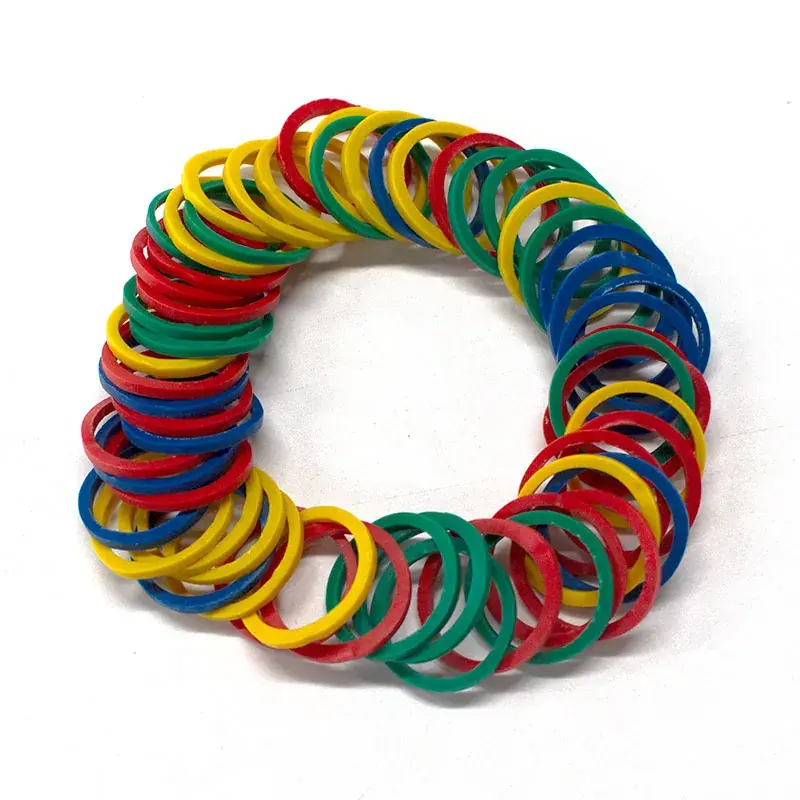
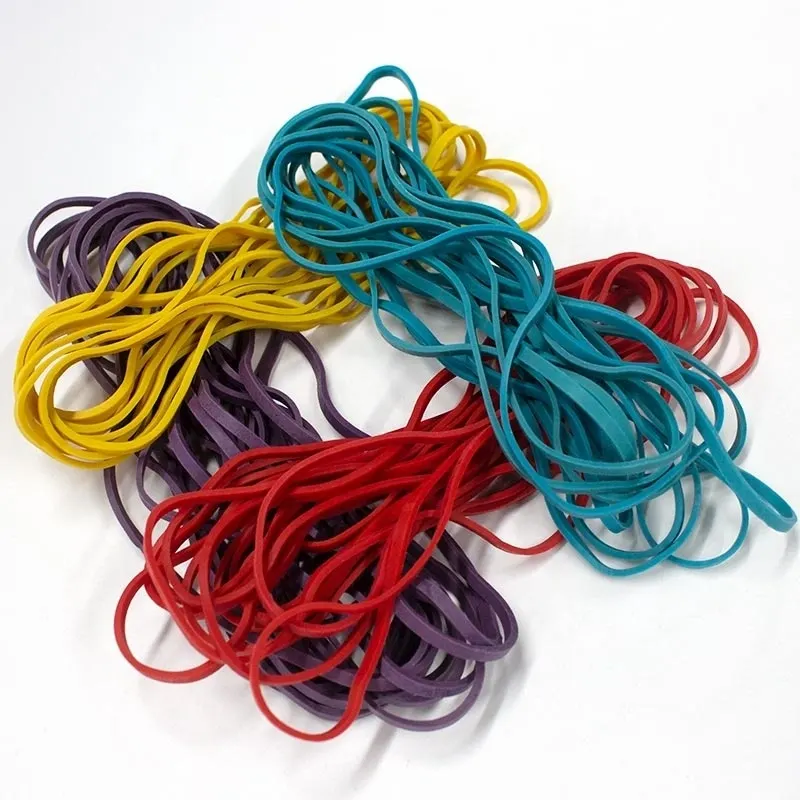
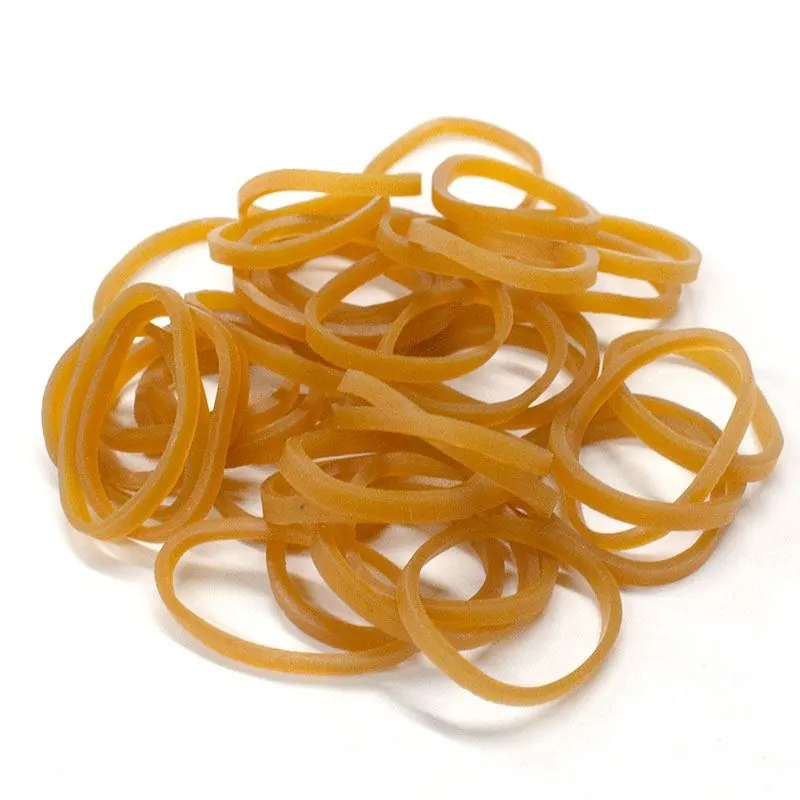
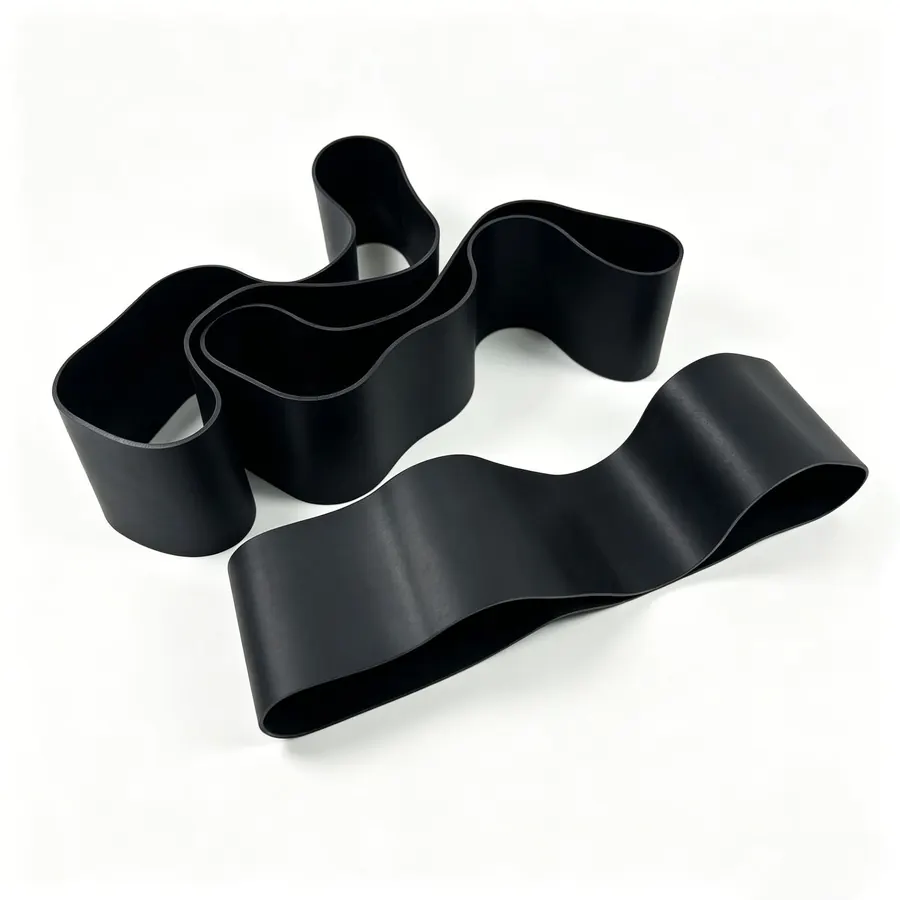
Coloured, natural and wide-wall black — three of the four product families this article specifies from.
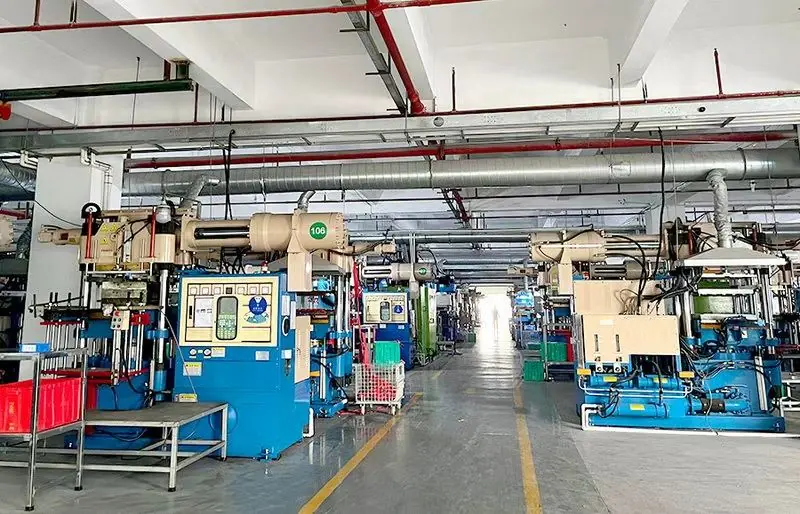
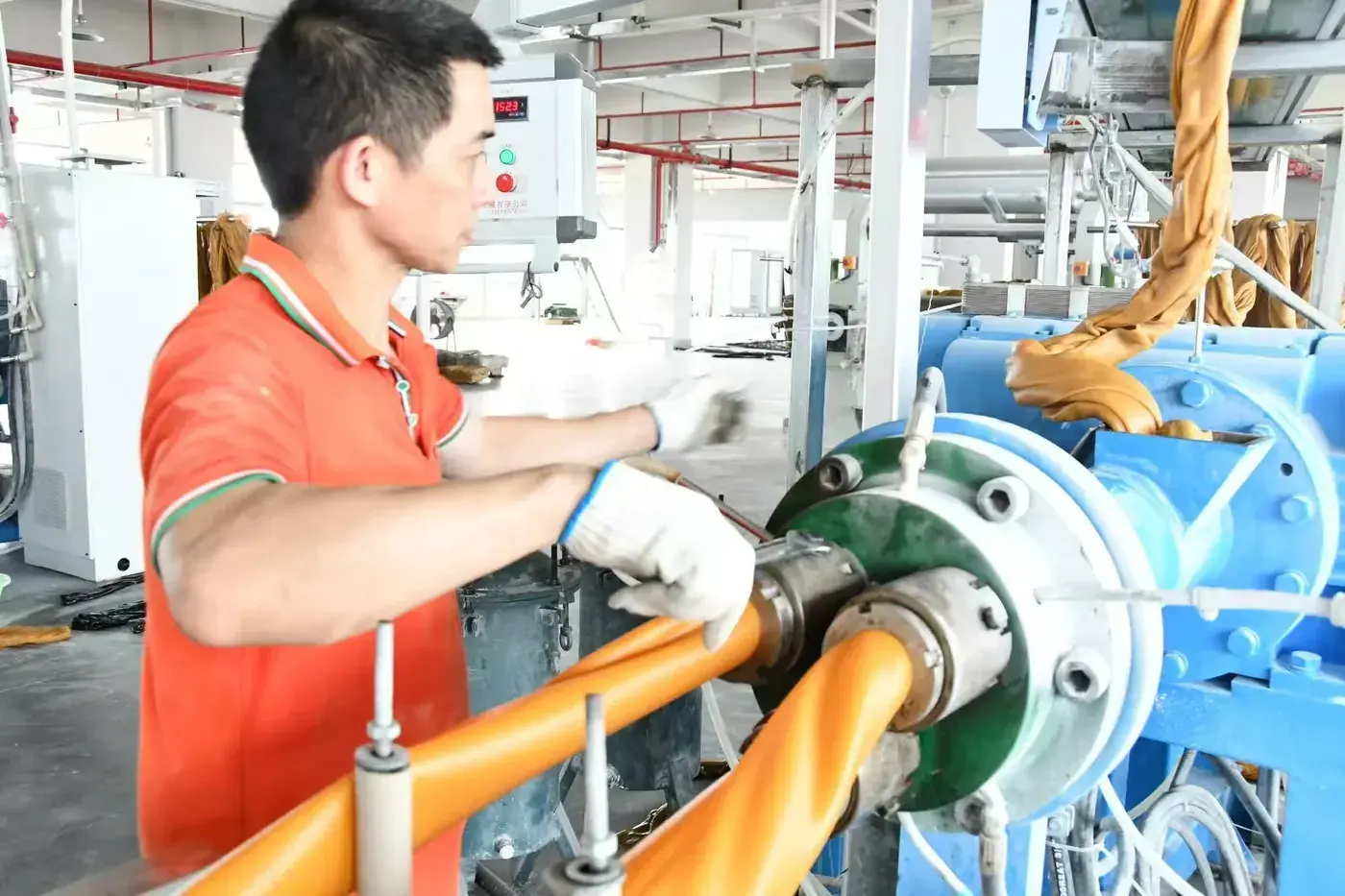
What Makes a Band Industrial
Three properties separate a line band from an office band, and none of them shows up on the label.
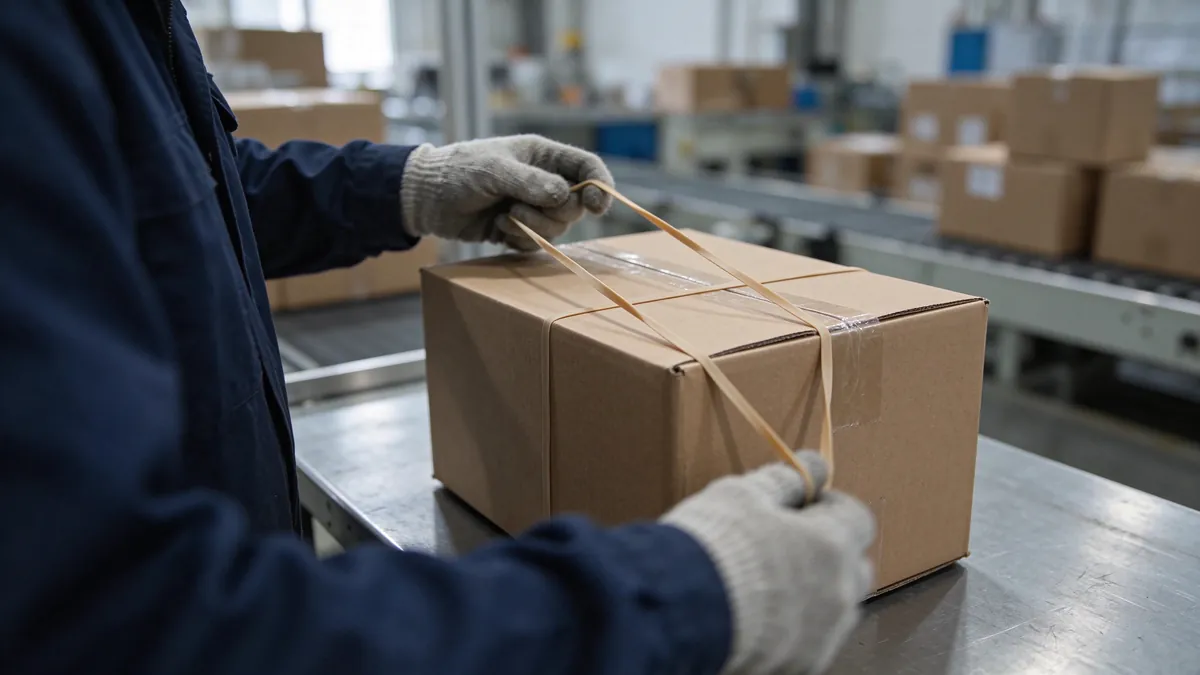
- Repeatable elongation. An office band is stretched once and forgotten. A line band is stretched hundreds of times per shift, to roughly the same length each cycle. If it does not recover quickly, the next cycle starts from a different tension and the bundle shifts.
- Loop tolerance. A ±1 mm difference is invisible when you tie a stack of envelopes. On an automated feeder it is the difference between picking the bundle up and dropping it.
- Batch consistency. Bands bought in March and bands bought in August have to pull the same. Well-compounded natural rubber does; reclaimed rubber does not, however good the first batch felt.
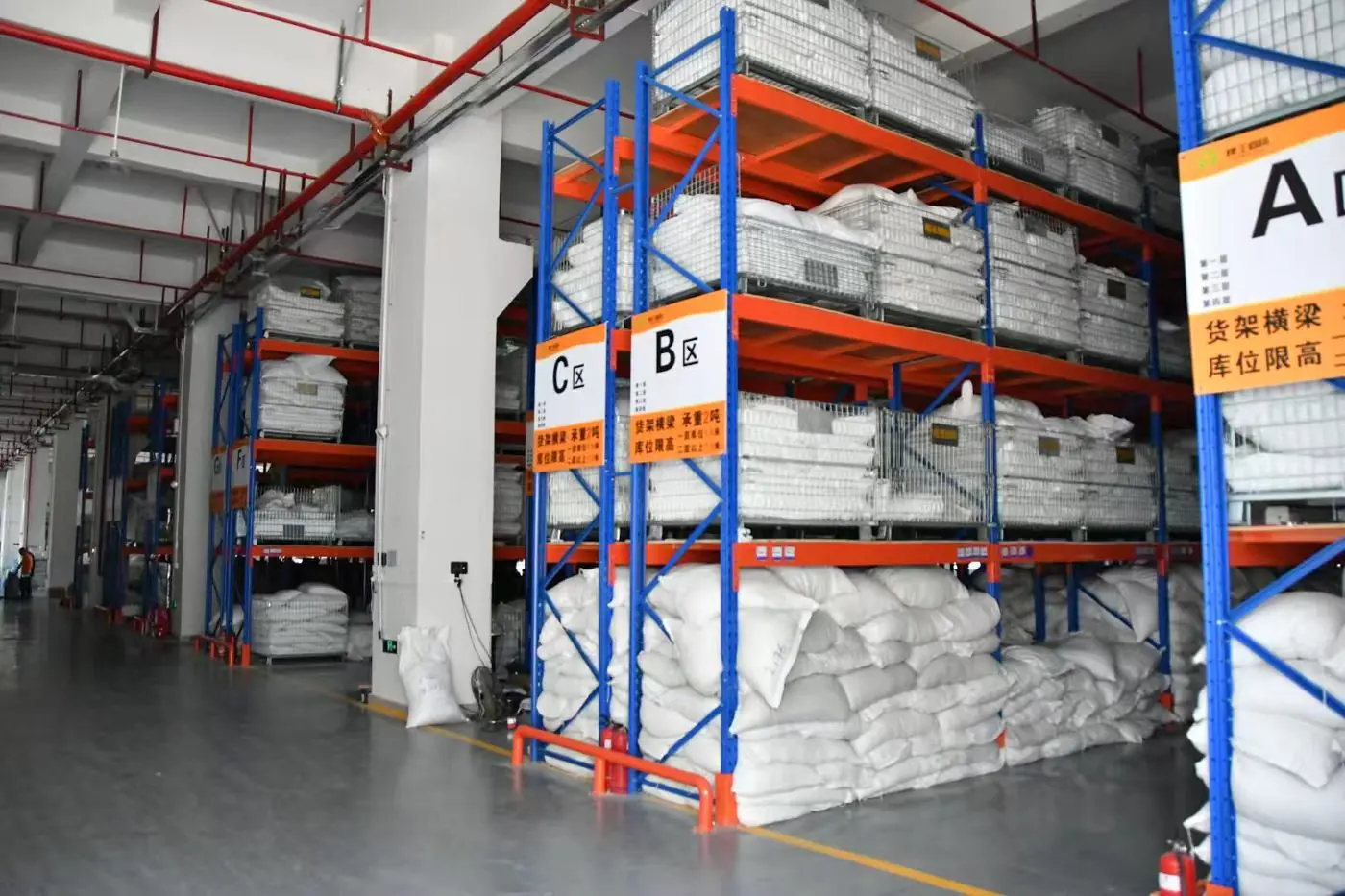
Four Loads That Decide the Grade
Elongation. How far the band is stretched relative to its resting length, and how often. Below 1.5× the material rarely matters. Past 2.5×, only high-grade natural rubber or EPDM holds without taking a permanent set — the band comes off longer than it went on, and every cycle after that is already loose.
Temperature. Ambient line work needs nothing special. Wash-down lines, chill rooms and outdoor yards do. EPDM keeps elastic memory from roughly −40 °C to +120 °C. Natural rubber stiffens sharply below freezing, so a band specified at room temperature becomes under-specified the moment it is handled cold.
Chemistry. Oils, solvents and fats attack natural rubber. If the band sits against lubricated parts, or the area is cleaned with aggressive chemicals, the compound has to be specified for that. “Food grade” printed on a carton is not a specification.
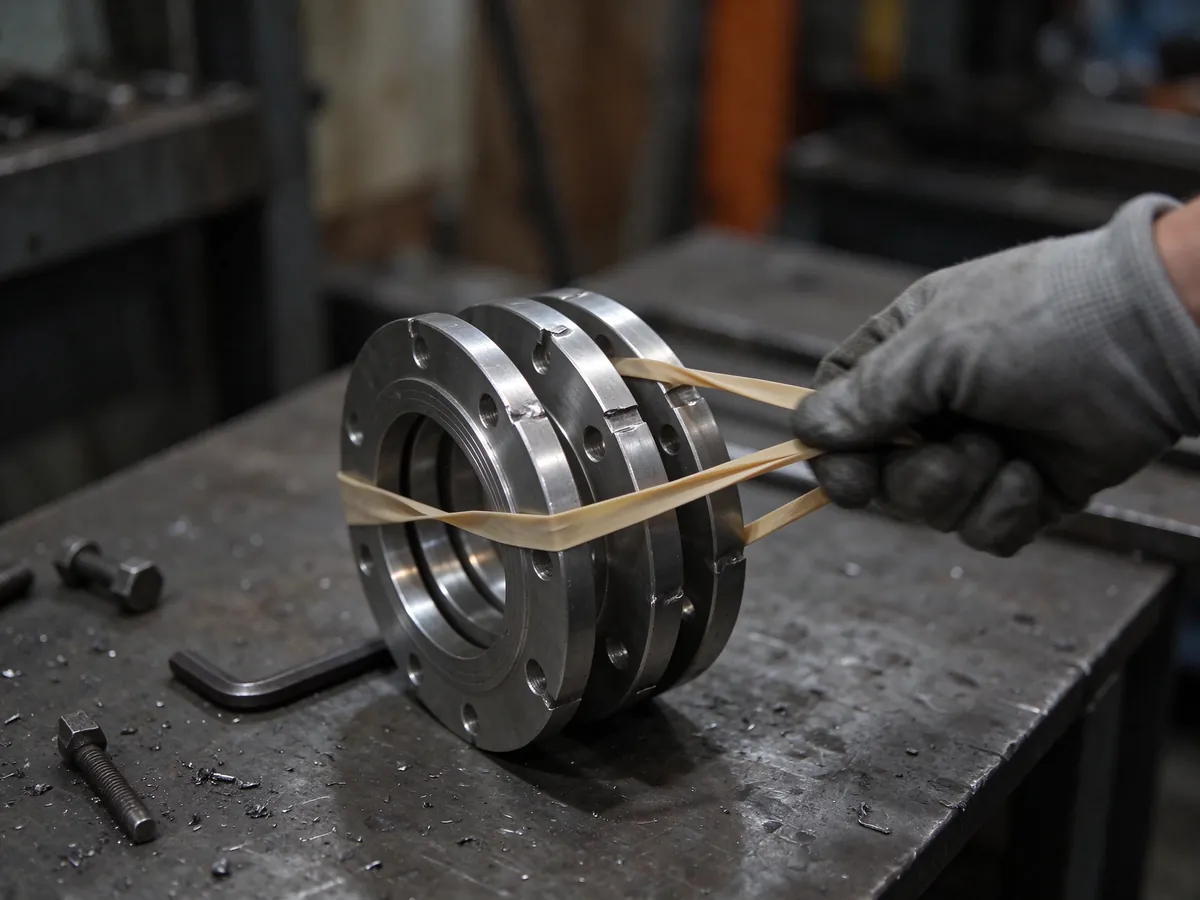
Abrasion. A band pulled across a pallet nail, a metal corner or a rough casting fails at that point long before it fails anywhere else. A thicker wall, or a TPU/TPR coating, takes that failure mode out of the calculation.
Material: Where Each One Belongs
| Material | Strength | Limit | Put it on |
|---|---|---|---|
| Natural rubber | Highest elasticity and grip per gram | Degrades with oils, ozone and UV | Carton tying, general packing, produce bundling |
| EPDM | Wide temperature range, ozone and UV stable | Lower tensile strength per millimetre of wall | Outdoor yards, cold rooms, nursery and vineyard work |
| TPU / TPR coated | Surface toughness, low residue | Higher cost per band | Assembly benches, cable work, clean handling |
| Latex-free synthetic | No protein allergens | Slightly lower stretch at the same wall | Food contact, medical packing, allergen-sensitive markets |
The mis-specification we see most often is natural rubber in an outdoor yard, chosen because it was the cheapest option that worked indoors. It holds for one season and then fails in a way that reads as a supplier problem rather than a material problem. Our agriculture range is specified for exactly that environment.
Size and Wall Thickness on a Line
Loop diameter and wall thickness set two different things, and both have to be right.
Loop diameter sets the stretch ratio for a given bundle. Stock runs #8 to #220 in the imperial number system and 20–70 mm in 1 mm steps, so tension can be tuned without changing anything else in the process. Our size chart maps the two systems directly.
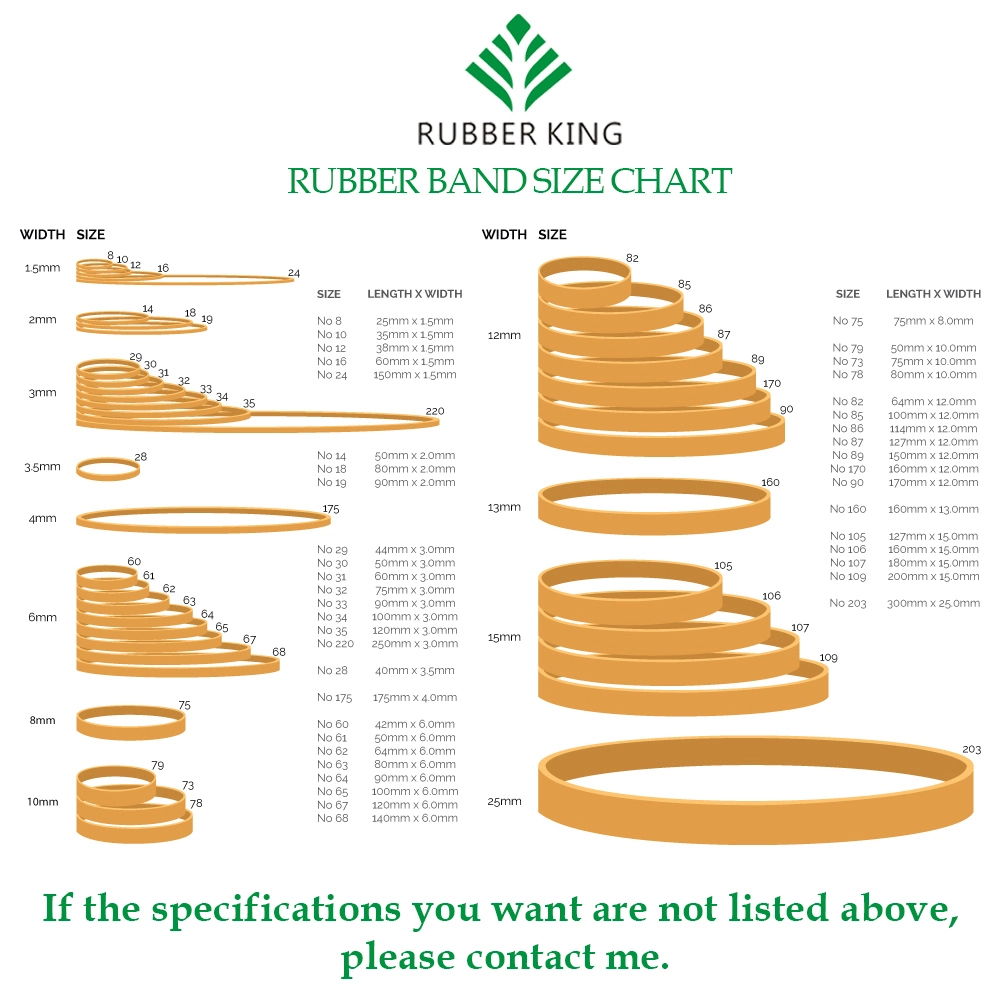
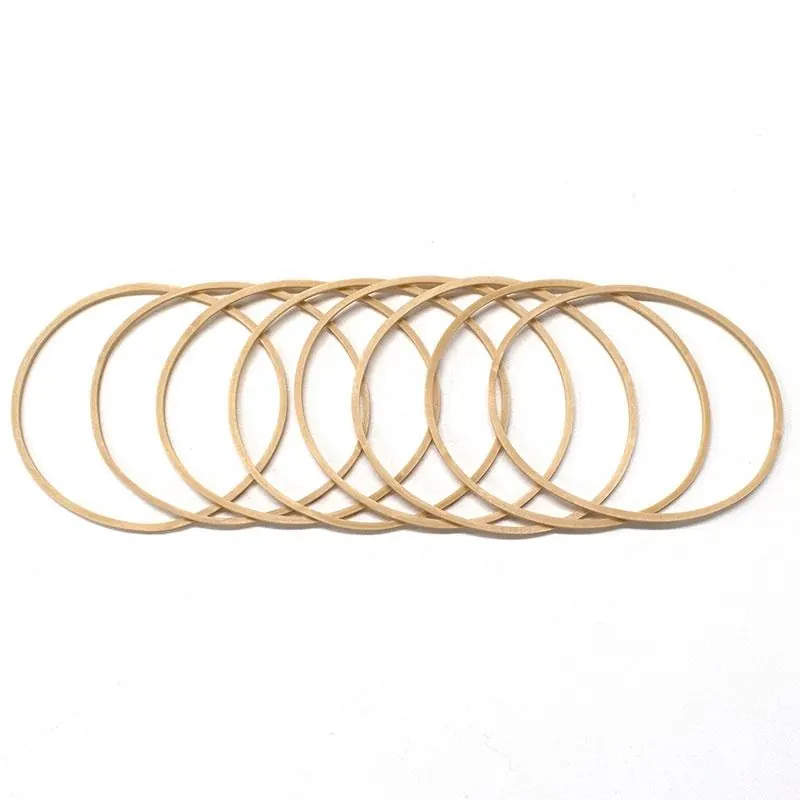
Wall thickness sets pull force and wear life. A 1.0 mm wall and a 1.5 mm wall at the same diameter are not interchangeable: the thicker one pulls harder and lasts longer, and on a high-cycle feeder that decides how often you stop to reload.
Anti-Static, Clean Areas and Food Contact
Electronics assembly, powder handling and any area with solvent vapour need a band that does not accumulate static charge. Anti-static bands are available in the same size range as standard loops, but the specification has to be stated at order — there is no visual difference from a normal band.
In clean areas the constraint is residue rather than charge: a band that leaves a mark on a housing that then fails inspection costs more than a band that costs twice as much. Coated bands solve this, and TPU versus TPR explains which coating suits which surface.
For food contact the deciding question is allergens, not temperature. Latex-free compounds remove the protein that triggers reactions while keeping the stretch close enough for most packing work.
Six Bands We Would Put on a Line First
Every operation is different, but if we had to stock one line with a starting set, this is what we would pick. Each one is here because it solves a load the others do not.
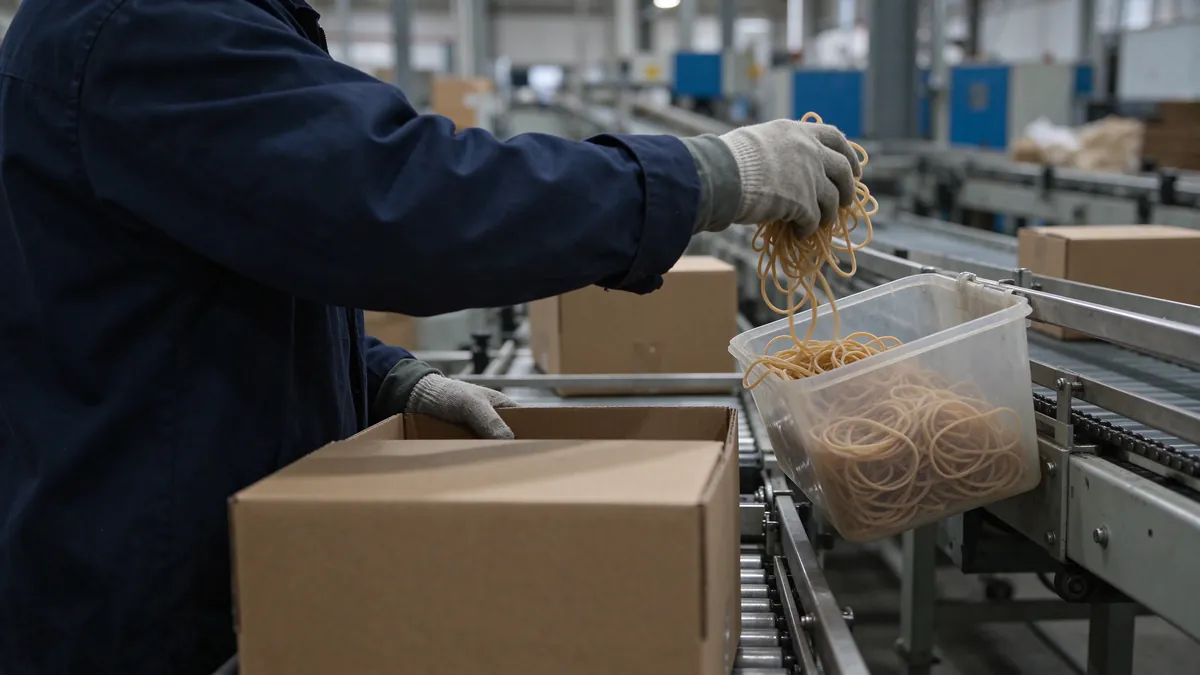
1. Wide-wall natural rubber for production lines
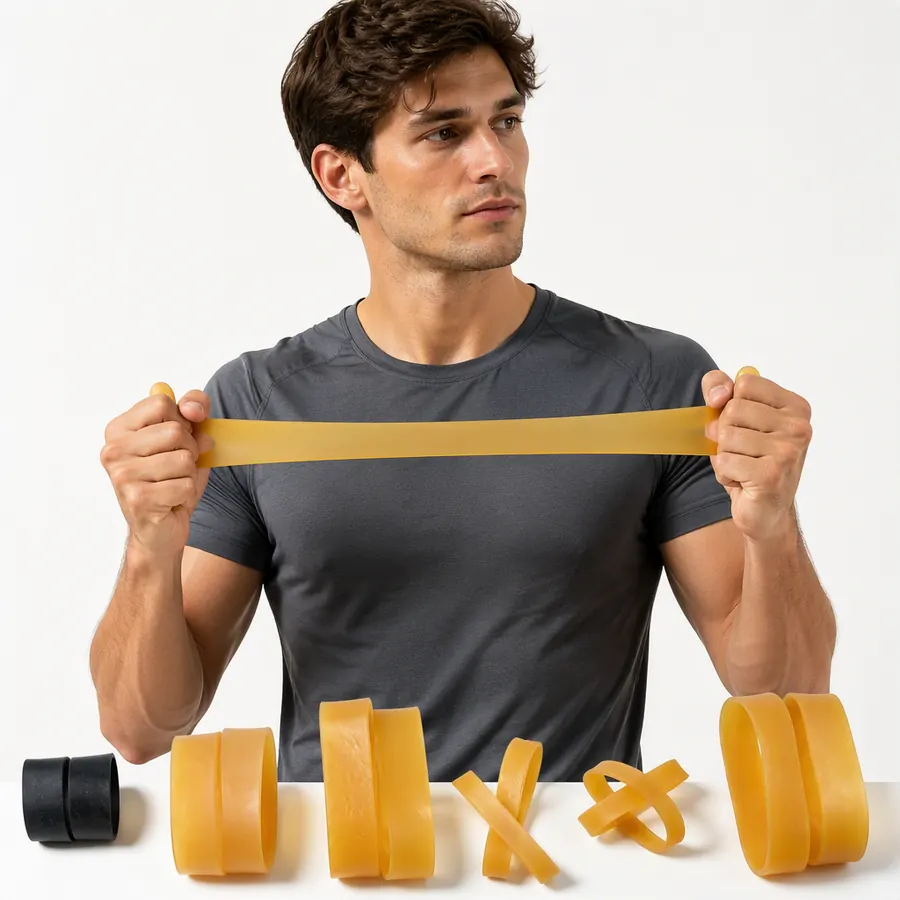
The widest standard natural rubber wall we stock. Where a bundle is heavy or the band is pulled across a corner, the extra wall is what keeps it from tearing at the contact point instead of stretching. View this product.
2. #60 / 60 mm for everyday industrial bundling
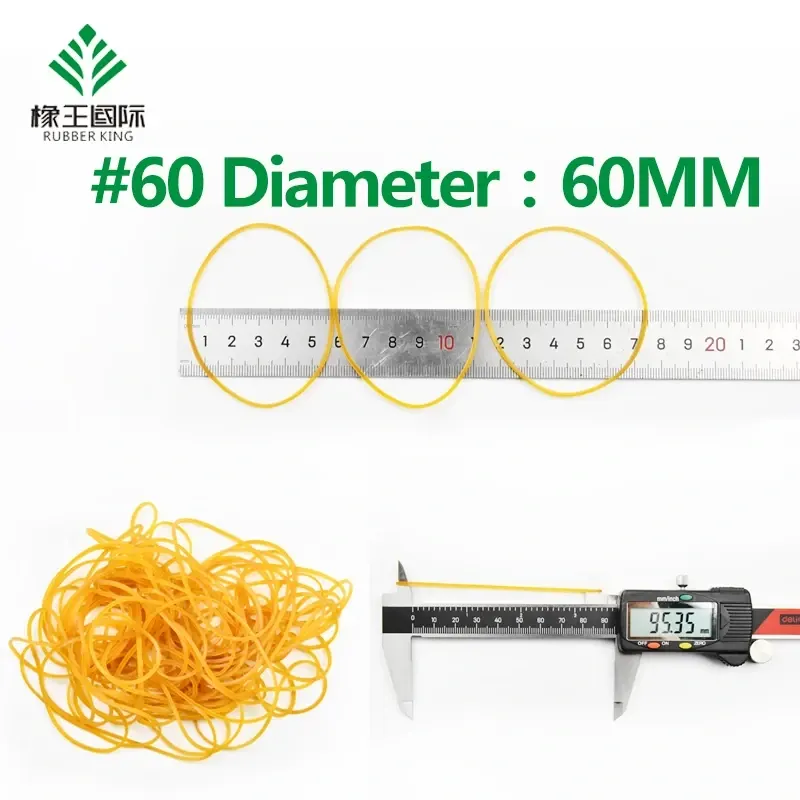
The mid-size workhorse. A 60 mm loop covers most carton and component bundling without pushing elongation past 2×, which is where natural rubber stays reliable over thousands of cycles. View this product.
3. #70 / 70 mm for heavy-duty bundling
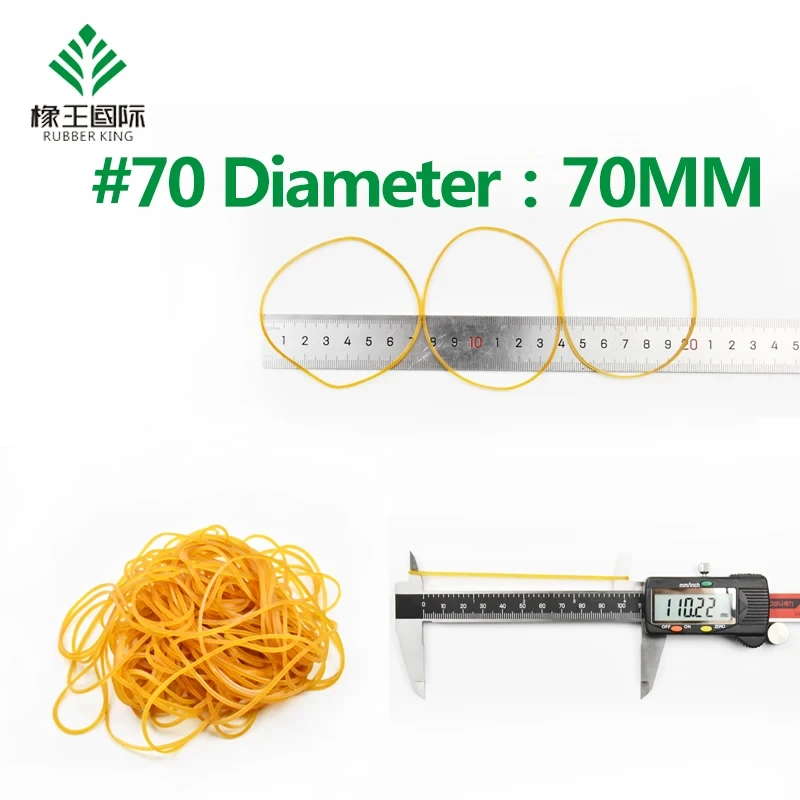
One step up for loads the #60 handles but does not hold comfortably: larger cartons, stacked components, anything that shifts in transit. View this product.
4. Extra-large thickened bands for holding, not tying
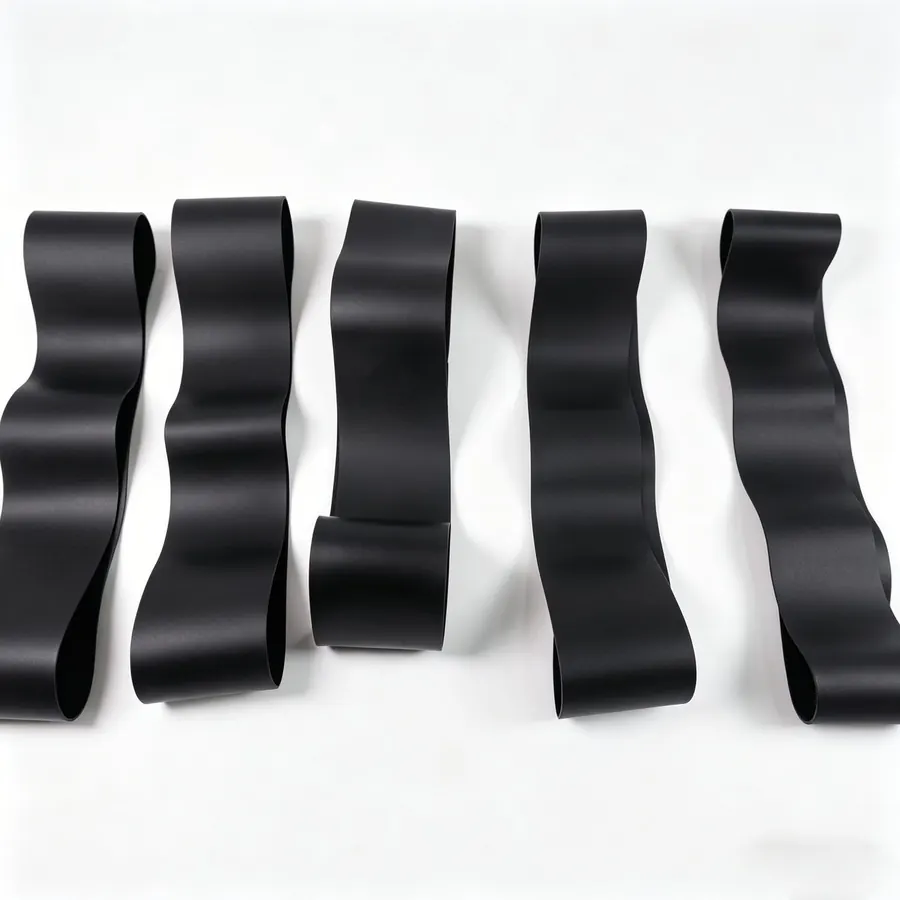
Built to stay on for weeks rather than minutes — oversized assemblies, bins, and factory parts that have to be kept together between stations. View this product.
5. Yellow 38 mm for general industrial use
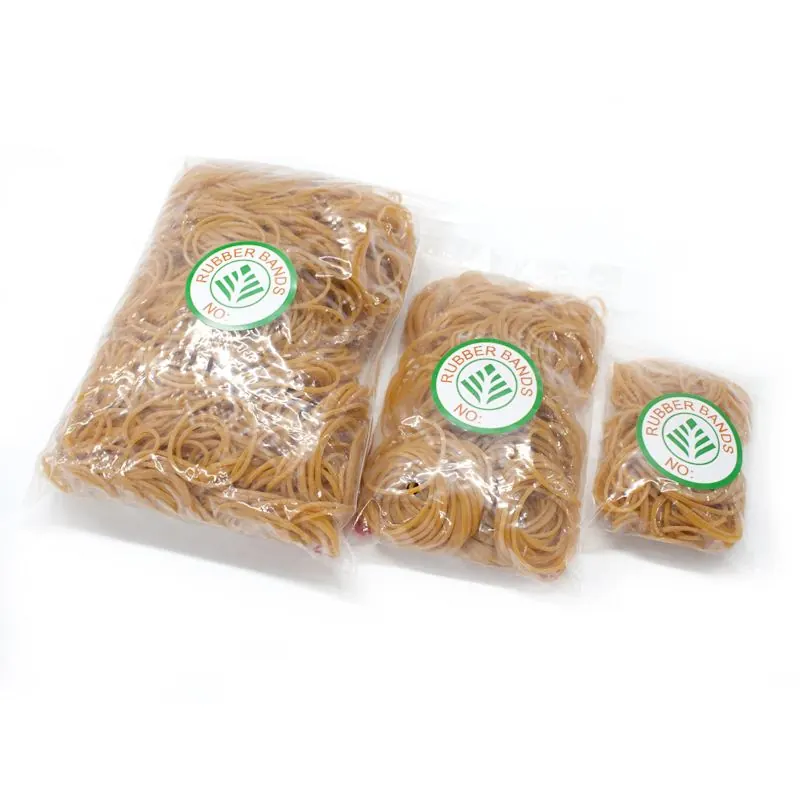
The size we ship most often to industrial buyers, in the yellow compound that makes a dropped band easy to find on a grey floor. View this product.
6. Bulk bands for produce and supermarket packing
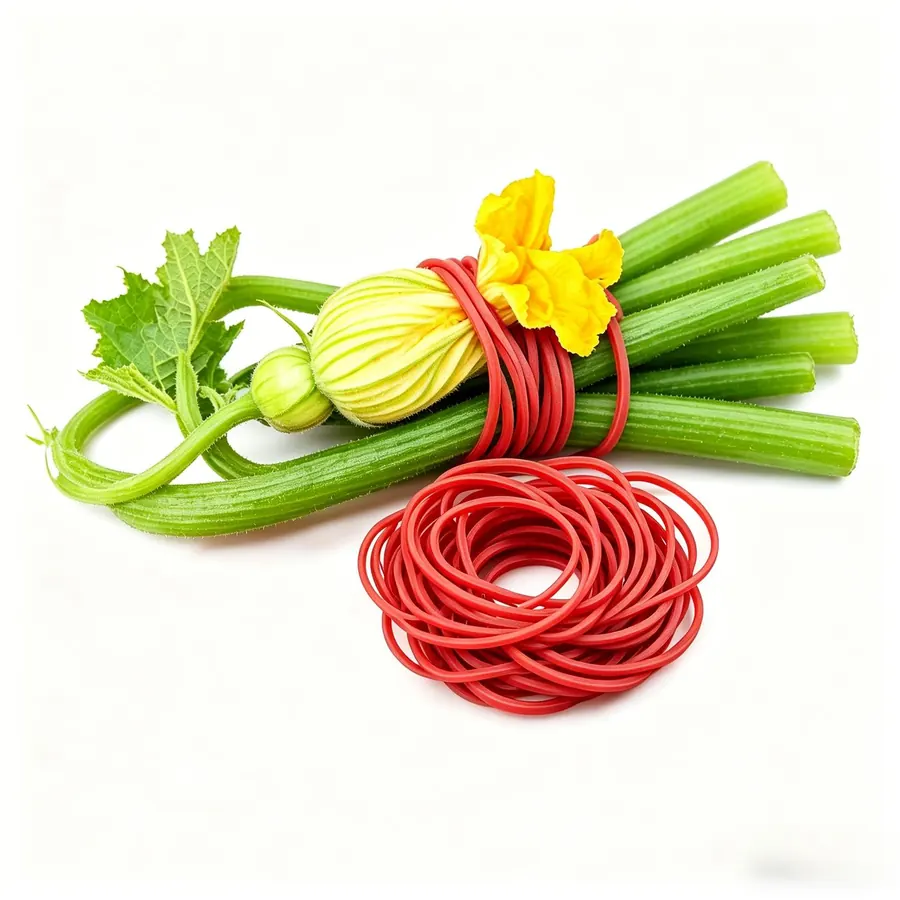
Where the band goes on fresh produce rather than on cartons: a food-contact compound, sized for bunching at speed, supplied in bulk because it is consumed by the box. View this product.
None of these is the best band in the abstract. Each answers one of the four loads above, and the reason to stock several is that a single line usually carries more than one of them.
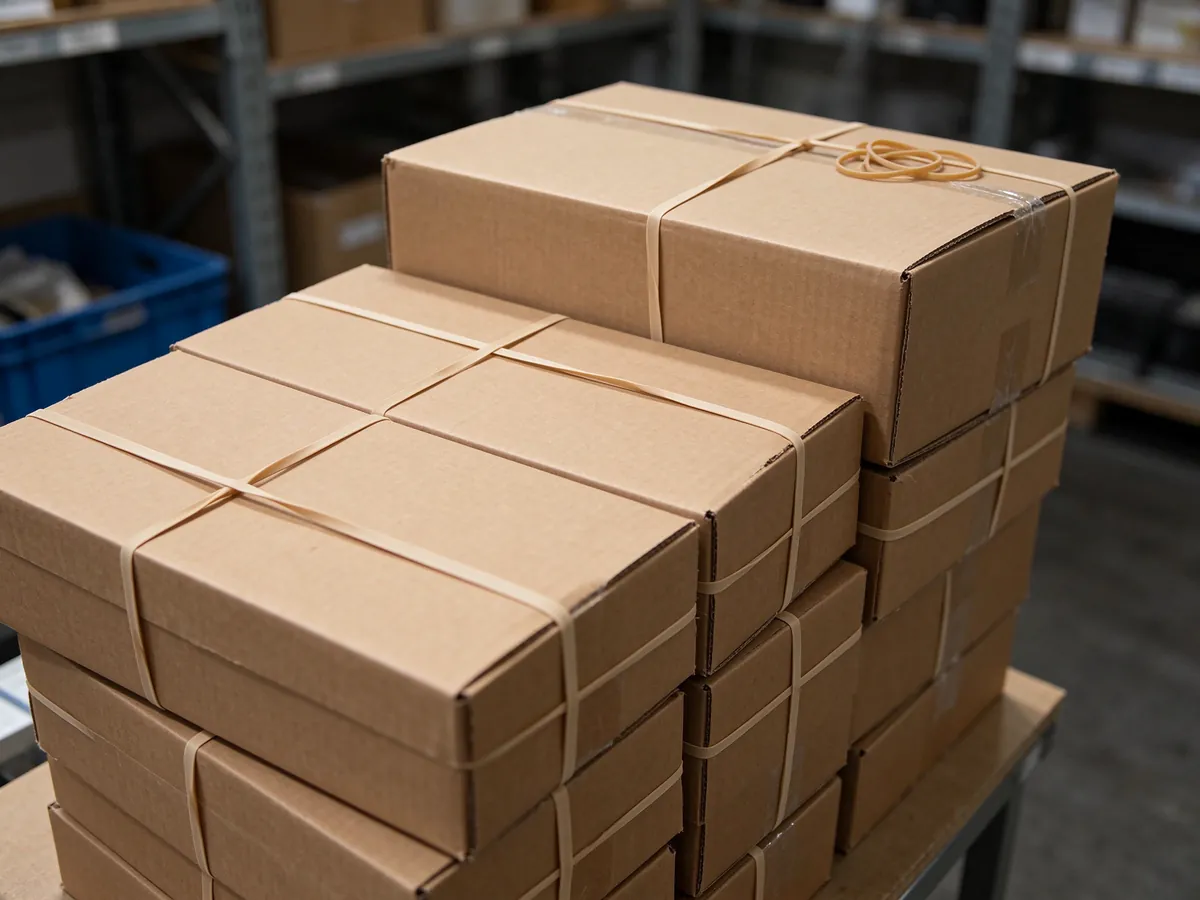
Specifying Checklist
Before you order, five numbers and one word:
- Loop diameter and wall thickness — or the number size, if you already work in that system.
- Stretch ratio at the working load, and cycles per shift.
- The temperature range the band actually sees, including handling and transport.
- What the band touches: oil, solvent, food, skin or bare metal.
- Whether the surface it crosses has an edge.
- The word: natural, EPDM, TPU/TPR or latex-free.
Give us those six and we can match a stock item or compound one to the brief. If you cannot, send a sample of what you use now together with the bundle dimensions, and the specification can be read back from it.
FAQ
Can one band cover a whole factory?
Usually not, and the reason is temperature rather than strength. A band that works on an ambient packing line will under-perform in a cold room or an outdoor yard even when the load is identical.
How long should an industrial band last?
Natural rubber stored correctly keeps usable elasticity for around two years. On a line, wear life is set by cycles and by the edge the band crosses, not by the calendar. Our guide to shelf life covers storage conditions.
Is “industrial grade” a real standard?
No — it is a marketing phrase. What actually distinguishes a band is the compound, the wall tolerance and the batch consistency, and all three have to be specified rather than assumed from the label.
Do you supply in bulk for automated feeders?
Yes. Bands ship in bulk bags sized for feeder hoppers, and loop diameter is held to ±1 mm across the batch.
Not sure which of the six fits your line? Send us the bundle dimensions and the working temperature and we will come back with a specification, free samples and a quote within 24 hours.
